

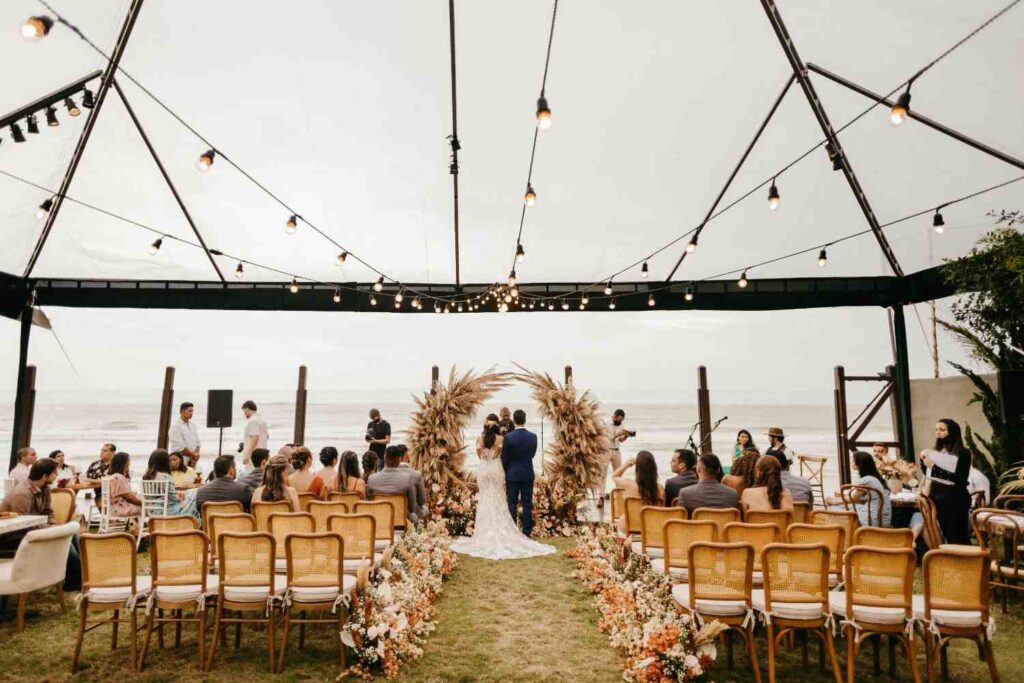
My sister Ruhi got married three years ago in Udaipur and honestly, watching that whole process was like watching someone slowly lose their mind in real time. She’s super organized at work—she’s a program manager at some tech company—and she was convinced she could handle planning her own destination wedding. Like, how hard could it possibly be, right? Wrong. So wrong. This experience taught me something really important about why best destination wedding planners in Gurgaon are absolutely essential and not just a luxury add-on. Most people in Gurgaon assume they can handle a destination wedding themselves, just like Ruhi did, but the reality of coordinating vendors across different cities, managing guest logistics, handling unexpected problems, and keeping everyone sane through the process is way more complex than people think. That’s exactly why best destination wedding planners in Gurgaon exist—to save couples from the kind of breakdown Ruhi experienced.
She books this beautiful venue in Udaipur off Pinterest basically. Doesn’t even visit it first. Just sees pictures online, falls in love, pays the deposit. A week later she realizes there’s no proper backup power system, so if the electricity goes out during the reception, you’re literally in the dark. She’d already sent invitations to like two hundred fifty people by this point. Then she hires a caterer from Delhi who’s never worked in Rajasthan before. Turns out sourcing fresh vegetables in Udaipur during certain seasons is complicated. Who knew? Well, someone who’d actually planned weddings there would have known. Then the florist situation became a nightmare because the local florists in Udaipur work differently than Delhi florists and don’t communicate the same way. And somehow her guest list spiraled from 150 to 250 people without her even noticing it happening, which meant hotel accommodation became this massive coordination nightmare. She was trying to book rooms at like eight different hotels because no single place had 250 rooms available. She had spreadsheets of spreadsheets trying to track who was staying where, what their dietary restrictions were, how they were getting from the airport to the hotels to the venue.
Three months before the wedding, I went to see her and she was literally stress-eating ice cream at midnight, still responding to vendor emails, crying because the caterer wanted changes to the menu that she’d already finalized with her mom. Her fiancé Rohit—lovely guy, totally lost in all of this—was just trying to stay out of the way because he knew that any question he asked would make her more stressed. Their parents were getting involved in decisions, which meant every choice was becoming a family negotiation. It was actually kind of brutal to watch.
The wedding day itself turned out beautiful—like, genuinely stunning photos. But here’s the thing: Ruhi doesn’t actually remember much about it. She was so deep in problem-solving mode that the day itself was kind of a blur of “oh thank god that worked” and “that vendor actually showed up on time.” She was wearing this incredible outfit and should have been feeling amazing, but instead she was stressed about whether the decoration team had set up the mandap correctly. When people now ask her about her wedding, she talks about the logistics problems more than the actual experience of getting married.
That’s when I learned something really important about destination weddings and why the best destination wedding planners in Gurgaon actually exist. They’re not just decorators or coordinators. They’re basically the people who let you actually enjoy one of the biggest days of your life instead of spend it in crisis management mode.
What I Learned Watching My Sister Almost Lose It
The Stuff Nobody Thinks About
After Ruhi’s wedding disaster, I started paying way more attention to weddings. I went to my cousin’s destination wedding in Mussoorie the next year. He and his wife Anjali hired a professional planner, and watching that process was like watching two completely different universes. Same complexity level, completely different stress level.
With Anjali’s wedding, the planner sat down with them for like two hours in their first meeting. Not to pitch services or anything. Just to actually understand them. She asked about how they met, what their families were like, what traditions mattered to them, what kind of experience they wanted their guests to have. She asked if they liked being involved in decisions or if they’d rather just trust her. She asked if they were punctual people or relaxed people, because apparently that matters when coordinating timelines. She asked what actually excited them about the wedding versus what felt like obligations. By the end of that conversation, the planner basically knew them better than some of their friends did.
Then the planner presented three possible destinations. Not just names—actual detailed breakdowns. This is what’s available in each location, this is the vendor quality we can access, this is the season and what weather looks like, this is the budget range for each place, this is the accessibility for your guests, this is how many vendors in that location actually do weddings regularly. They visited one of the destinations together. The planner took them to the venue, walked through what would happen where, talked about what could go wrong and how to handle it.
Once they picked Mussoorie and locked the venue, things got real organized. The planner sent them a timeline document that was like, way more detailed than any project plan I’ve seen at work. “By January 15, you need to decide on accommodation style preferences.” “By February 1, vendor list needs to be finalized.” “By March 10, guest list must be locked because invitations go out March 15.” “By April 20, all vendor menus need to be finalized.” And here’s the thing—the planner actually owned this timeline. She was checking in, making sure things happened on schedule, reminding them of decisions that needed to be made. Anjali literally didn’t have to keep track of deadlines or worry about forgetting something. The planner had that entire responsibility.
How the Planner Actually Prevented Disasters
One thing that fascinated me was watching the planner problem-solve before problems actually happened. Like, she identified that monsoon season in that area can bring heavy rains. So she went to the venue and said, “Hey, if we get heavy rain, what are our options?” The venue is like, “We can set up a tent or move to the indoor space.” The planner said, “Great. Let me scout both spaces so I know exactly how to make this work if it happens.” She physically went to both spaces, took photos, thought about how the decoration would work in each space, made sure the lighting and sound setup would function in each space. When it actually rained on the wedding day—like, seriously rained, not just drizzle—the transition to the tent was seamless. Guests barely noticed. The planner had literally already imagined that scenario and had solutions ready.
My sister, on the other hand, had not anticipated rain. Or rather, she knew it was monsoon season and vaguely thought “there might be rain” but didn’t actually plan for it. When the electricity went out during the reception (separate issue, also weather-related), everyone panicked. There was no backup power system. They had to quickly figure out how to run the DJ setup and ambient lighting and it was this whole dramatic thing that probably didn’t need to happen if someone had thought ahead.
The Vendor Coordination Thing I Didn’t Realize Was Complex
I watched the planner work with vendors for Anjali’s wedding and I literally had no idea this was even a skillset. Like, she’s coordinating the florist, the caterer, the decorator, the photographer, the videographer, the DJ, the entertainment, the logistics coordinator, the accommodation person. That’s like, ten different people who all need to understand the vision, need to be on the same timeline, need to coordinate with each other.
The planner created this detailed schedule that went to every vendor. The florist knows she needs to be on site at 6 AM and be done by 11 AM because the decorator comes at 11 AM. The caterer knows the ceremony is at 4 PM so they need to start food service at 7 PM for a 7:30 PM reception dinner. The photographer knows the vendor order so he knows which moments to capture. Everyone has their specific timeline and they all fit together like puzzle pieces.
When my sister didn’t do this, the florist and decorator showed up at overlapping times and basically got in each other’s way. The photographer didn’t know when certain events were happening so he missed key moments. The caterer ran out of one dish because nobody had finalized the guest count accurately. These weren’t things that ruined the wedding but they created unnecessary stress and chaos.
The Real Difference a Professional Makes
My Friend Divya’s Goa Wedding
So last year, my friend Divya got married in Goa. She was super torn about whether to hire a planner because she felt like she could handle it herself. She’s actually really organized, has done event planning for work. But her fiancé Arun convinced her that this was different because it was personal and emotional and would involve both their families in a way work events don’t.
She hired a planner who was based in Mumbai but had done tons of Goa weddings. Right away, the difference was obvious. The planner knew which caterers in Goa actually know how to do Indian food properly as opposed to just doing fusion or Portuguese-influenced stuff. She knew which florists could handle the humidity without the flowers wilting. She knew which venues actually have reliable electricity or backup systems. She knew which hotels had good group rates for guests. She knew the logistics of getting people from the airport to hotels to venues in Goa, which is actually more complicated than you’d think if you’re not familiar with how things work there.
Divya didn’t have to figure any of that out. She just had to tell the planner what she wanted and the planner handled finding the right vendors who could deliver on that. When Divya wanted this specific bohemian vibe with lots of natural flowers and string lights, the planner knew which florist could pull that off in Goa. When they wanted specific food, the planner knew which caterer specialized in that cuisine. When they wanted the ceremony in the evening by the beach, the planner coordinated with the venue and the photographer and the lighting person to make sure everything would work with that timing and the light conditions.
The wedding day? I was there. It was completely smooth. Guests arrived to a welcome drink by the pool. There was a nice welcome dinner that evening. The next morning was a relaxed brunch. The wedding ceremony was at sunset by the beach and it was absolutely stunning. The reception was this beautiful outdoor dinner. Everything flowed. You know why? Because someone who’d done this before had thought through every single element. She’d coordinated vendors who all knew what they were doing. She had a timeline. She had a backup plan for weather. She had contingencies if anything went wrong. And on the day, she was there managing everything so the couple could just… get married and enjoy it.
My Colleague Shreya’s Multi-City Wedding
Then there’s my colleague Shreya who did this absolute crazy thing where she had her wedding across two cities. Mehendi and Sangeet in Delhi with her side of the family, then wedding ceremony in Udaipur with everyone there, then a reception back in Delhi with her husband’s side of the family. Four major events. Two cities. Different logistics for each. Different vendors for each. Different catering companies. Different decoration teams. Literally hundreds of people across all these events.
I asked her how she was managing it and she was like, “Are you kidding? There’s no way I could manage this without my planner.” The planner had vendor networks in both Delhi and Udaipur. She coordinated the Mehendi and Sangeet teams in Delhi. She coordinated the wedding team in Udaipur. She coordinated the reception team back in Delhi. She made sure the bride’s outfit transitioned between cities properly—like, the lengha had to be in Udaipur at a specific time, the reception outfit had to be in Delhi at a specific time. She managed the photography and videography across all events so there was continuity in the visual storytelling. She managed accommodation for different groups of guests at different events.
Shreya said something I’ll never forget: “I know a planner basically saved my life because if I’d tried to do this myself, my marriage wouldn’t have survived the wedding planning process.” Her husband is apparently the opposite of organized, so she would have been doing everything alone. They probably would have fought constantly. Instead, she hired someone, delegated, and they actually enjoyed the process.
Actually Understanding What These Planners Do
The First Conversation Sets Everything Up
Every planner I’ve talked to asks basically the same kinds of questions in the initial conversation. They want to know: What’s your vision? Not like, “elegant traditional” or whatever vague description. But actually, what does it look like in your head? What feeling do you want people to have? What’s your love story and how does that show up in your wedding? What traditions matter to your families? What do you actually enjoy doing versus what feels like obligations?
Then they ask practical stuff. When do you want to get married? Do you have a specific destination in mind or are you open? How many people are you thinking? What’s your actual budget—not your dream budget, but what you’re actually willing to spend? What’s flexible and what’s non-negotiable?
And then they ask about how you operate as a couple. Do you want to be involved in every decision or would you rather delegate? Are you people who are stressed by details or energized by them? Do you want to be hands-on during planning or hands-off? All of this shapes how the planner works with you.
The Systems That Make Everything Work
Once they understand you, the planner creates this detailed project plan. I’ve seen a few of these and they’re honestly impressive. There’s a timeline with specific deadlines. By this date, these vendors need to be booked. By this date, the menu needs to be finalized. By this date, the guest list needs to be locked. By this date, invitations go out. And the planner owns tracking all of this. She’s checking in, making sure things are happening, sending reminders, coordinating between you and vendors.
The planner also creates vendor lists and questionnaires. She’s not just giving you names. She’s actually vetting vendors. She’s asking them detailed questions about experience, about what they can deliver, about their communication style. She’s basically doing your research for you so you don’t have to talk to like fifty different florists to find the right one.
Then there’s the actual vendor coordination where every vendor gets a detailed timeline. Florist knows exactly when to arrive and when to be done. Caterer knows the exact timeline of events so she knows when to serve food. Photographer knows what events are happening when. Decorator knows how long he has for setup. Everyone’s on the same page. That alone prevents so much chaos.
The Day-of Coordination That Changes Everything
What really blew my mind watching Anjali’s wedding was the day-of coordination. The planner showed up at like 6 AM. She had printed timelines for every vendor. She did a walk-through of the venue checking that everything was set up correctly. She met with vendors as they arrived. She was literally managing the timeline—”Okay, photographs are happening now, so make sure guests aren’t walking in front of the photo location. DJ, you’re starting this song at 7:15. Caterer, you’re starting food service at 7:30.” She had walkie-talkies coordinating with different teams. When something went even slightly off schedule, she adjusted. When a vendor asked a question, she had the answer. When a guest needed something, she handled it. The couple? They were getting ready, doing photos, spending time with their families, celebrating. They weren’t stressed about logistics because somebody else was handling it.
Compare that to my sister’s wedding where Ruhi was getting ready but also fielding calls from vendors asking questions, making last-minute decisions, troubleshooting problems. Her mom was stressed trying to manage guest logistics. Nobody was just enjoying the moment. It was all rushed and stressful and honestly kind of sad because it didn’t need to be like that.
What Different Weddings Actually Require
Intimate Weddings
My cousin Vikram did a small destination wedding with like fifty people in Neemrana. Just close family. They hired a local coordinator who wasn’t a full-service planner but was someone who knew the property, knew local vendors, could handle day-of logistics. It was still helpful to have someone because even with fifty people, you’re coordinating accommodation, meals, a ceremony timeline. Vikram’s wife Ruchi said having that coordinator took so much pressure off even though it was a small wedding.
But you can do a small wedding with less professional help than a large one. If you’ve got a capable family member or friend who’s willing to help, that can work. If you’re more hands-on and less emotional about details, you can handle more yourself. But honestly, even small weddings benefit from someone coordinating.
Medium Weddings with Multiple Events
This is where I think planners really shine. Like a hundred fifty to two hundred people, maybe welcome dinner plus wedding plus brunch. You’ve got guests from different cities. Multiple venues potentially. Different caterers maybe. This is complex enough that having someone coordinate it makes a huge difference. Divya’s Goa wedding was this category and having a planner meant everything ran smoothly.
Large, Multi-City Weddings
Shreya’s wedding was this category. Four events, two cities, hundreds of people. There’s literally no way to do this without professional help unless you’re basically making it your full-time job for six months. And even then, a professional planner has networks and relationships that make it possible to execute at a level that you couldn’t do on your own.
The Cost Thing That Everyone Worries About
What People Actually Spend
I’ve asked pretty much all the married people I know what they spent and the numbers vary so much it’s hard to pin down. For something intimate in a nearby destination like Neemrana, you might spend fifteen to twenty-five lakhs total. For something mid-size like a hundred fifty people in Jaipur, you’re probably looking at fifty to eighty lakhs. For something big and elaborate with multiple events and cities, you could easily be at a lakh or two.
Here’s what those numbers break down to roughly: venue is probably your biggest cost, like twenty to twenty-five percent of total. Food and beverages is another big one, probably twenty-five to thirty percent. Photography and videography, maybe ten to fifteen percent. Decorations and flowers, another ten to fifteen percent. Transportation, accommodation coordination, entertainment, invitations and printing, planner fees, miscellaneous unexpected costs fill out the rest.
A planner typically charges something like ten to fifteen percent of total wedding cost. So if your wedding is eighty lakhs, the planner might charge eight to twelve lakhs. That sounds like a lot but here’s what’s happening: the planner is saving you money on vendors through negotiation. She’s preventing costly mistakes. She’s getting better rates because she’s booking constantly. She’s actually often saving you more money than she costs, plus she’s saving you time and stress, which has value even though you can’t put a number on it.
Where You Should Actually Spend Money
From watching all these weddings, photography and videography are things worth splurging on. Because you’re going to remember photos and videos way more than you’ll remember details of decorations. Food is also worth spending on because people remember how the food tasted and whether they felt fed properly. The venue is important because it sets the whole mood. Everything else? You can be a bit more flexible. Like, your decorations don’t have to be the most elaborate. Your entertainment doesn’t have to be famous performers. But good food and good photos will make the wedding feel premium and memorable.
Real Things People Have Asked Me
How Much Time Do I Need to Start Planning?
Everyone tells you eight to twelve months is ideal. That’s what the planners say, that’s what the wedding magazines say. And I think it’s true, honestly. It gives you enough time to book popular venues before they’re booked solid. It gives you time to lock in good vendors. It gives guests proper notice so they can save money and arrange time off work. It keeps you from being in constant rush mode.
That said, I know people who’ve planned destination weddings in five or six months. Ruhi probably could have done it in less time if she’d been organized and had help. But that would have meant compromising on some vendor choices or venue options or being in stress mode the whole time.
Can I Do This Without a Planner?
Honestly? It depends on the wedding. Vikram’s small wedding didn’t need a full-service planner. Ruhi’s wedding definitely did need one and she didn’t have one, which is why it was stressful. If your wedding is under a hundred people and it’s just one main event, you might be able to manage it yourself if you’re organized. If your wedding is over a hundred fifty people or has multiple events, I genuinely think you should hire someone.
I say this as someone who watched my sister almost have a breakdown over this. Get the planner. Seriously.
What If Bad Things Happen on the Wedding Day?
That’s literally what the planner is there for. Anjali’s wedding had this serious rain situation. A planner who’d worked in that area before knew it was a possibility, had already identified backup options, and had walked through exactly how things would work if it happened. So when the rain came, nobody panicked. They just transitioned to the tent option and the ceremony was beautiful. Most guests probably didn’t even realize the original plan had changed.
My sister didn’t have contingency plans. When the electricity issue happened, everyone freaked out because there was no plan B. That could have been handled so much better if someone with experience had said, “Okay, here’s what we do if this happens.”
What If I Want to Be Super Involved in Every Decision?
Some people—and I get this because my cousin Anjali was like this—want to be involved in every detail. They want to choose colors, choose flowers, choose music, choose everything. A good planner accommodates this. She presents options, consults you on decisions, keeps you involved in the creative stuff. But she handles all the logistics and coordination. So you get to make the choices that matter to you without getting buried in the admin work. That’s actually the perfect balance.
Why This Actually Matters
Okay so here’s what I’ve learned from watching a bunch of my friends and family members get married in different ways. The ones who hired professional planners actually enjoyed their weddings. Like genuinely. They remember the day as fun and joyful and exciting. The ones who planned it themselves or had their families plan it? They remember stress. They remember problems. They remember scrambling to fix things. They don’t remember the actual joy of getting married.
That’s actually kind of sad because your wedding day is supposed to be amazing. It’s supposed to be one of the best days of your life. If you spend it stressed about whether the florist is going to show up or whether the caterer is going to have enough food or whether the ceremony is going to start on time, you’re missing your own wedding.
Hiring a professional planner costs money, yeah. But you’re basically paying for someone to let you actually enjoy your wedding day instead of spend it in crisis management mode. And honestly? That’s worth it.
If you’re planning a destination wedding and you’re based in Gurgaon, just talk to someone who knows what they’re doing. I keep bringing up Annhad Events because I’ve literally seen their work in action through friends and it’s consistently really good. They’re Gurgaon-based, they do destination weddings constantly, they have networks across all the popular wedding destinations in India. They’ve done it enough times that they know what works and what doesn’t. They know how to extract budget from your head and turn it into an actual wedding you’ll love. They know vendors who are reliable and actually good at what they do.
Seriously, just hire them. Or hire someone like them. Don’t do what my sister did. Don’t stress yourself out. Don’t turn your wedding planning into a nightmare. Get someone who knows how to do this so that your actual wedding day can be beautiful and joyful and something you actually remember.
Check out Annhad Events and just talk to them. Best decision you’ll make about your wedding.